Ownership follows professional rules.
The profession and the province decide who can hold shares in a professional corporation. Each buy-in, retirement, or family arrangement changes the cap table, and the dates matter.
Ownership and share classesHealthcare and professional groups
Dental, medical, veterinary, and pharmacy groups often run on professional corporations, a clinic company, a management company, and a property company. TaxDesk shows how they connect, keeps each company’s tax records separate, and remembers who owned what, and when.
A typical practice group

Sound familiar?
Without a shared recordOwnership lives in the minute book and someone’s memory. The date and share class get rebuilt from old emails.
In TaxDeskEvery ownership change is recorded with its date. See the structure as of any day, and who held what.
Without a shared recordA new professional corporation and clinic company arrive with their own returns, balances, and CRA accounts. Nobody has the whole picture.
In TaxDeskUpload the seller’s returns and notices. TaxDesk links each fact it finds to its source. You decide on anything that conflicts with the record.
Without a shared recordKnowing which company files what, and why, leaves with them.
In TaxDeskThe structure, deadlines, and history stay with the company. Invite the next person, or the next advisor, to the same record.
Why it gets complicated
Practices are structured this way for good reasons. The result is several companies with different tax profiles that have to stay consistent.
The profession and the province decide who can hold shares in a professional corporation. Each buy-in, retirement, or family arrangement changes the cap table, and the dates matter.
Ownership and share classesThe practice, the management company, and the property company often hold different CRA accounts. Registrations and filing settings can differ across the group, and each belongs on its own record.
GST/HST operating guideManagement fees, rent, dividends, and shareholder loans all pass between the companies. Each side’s records should agree, and each side needs its documents.
Shareholder and intercompany loansCDA, RDTOH, and GRIP balances grow company by company. Dividend planning depends on them, and their history is hard to rebuild.
CDA, GRIP, RDTOH and lossesThis is general information, not tax or legal advice. Ask your accountant how these rules apply to your group.
Inside TaxDesk · Ownership
Shareholders, share classes, shares, ownership percentages, and adjusted cost base are listed for each company. Ownership changes come from recorded share transactions, not from overwriting a number.
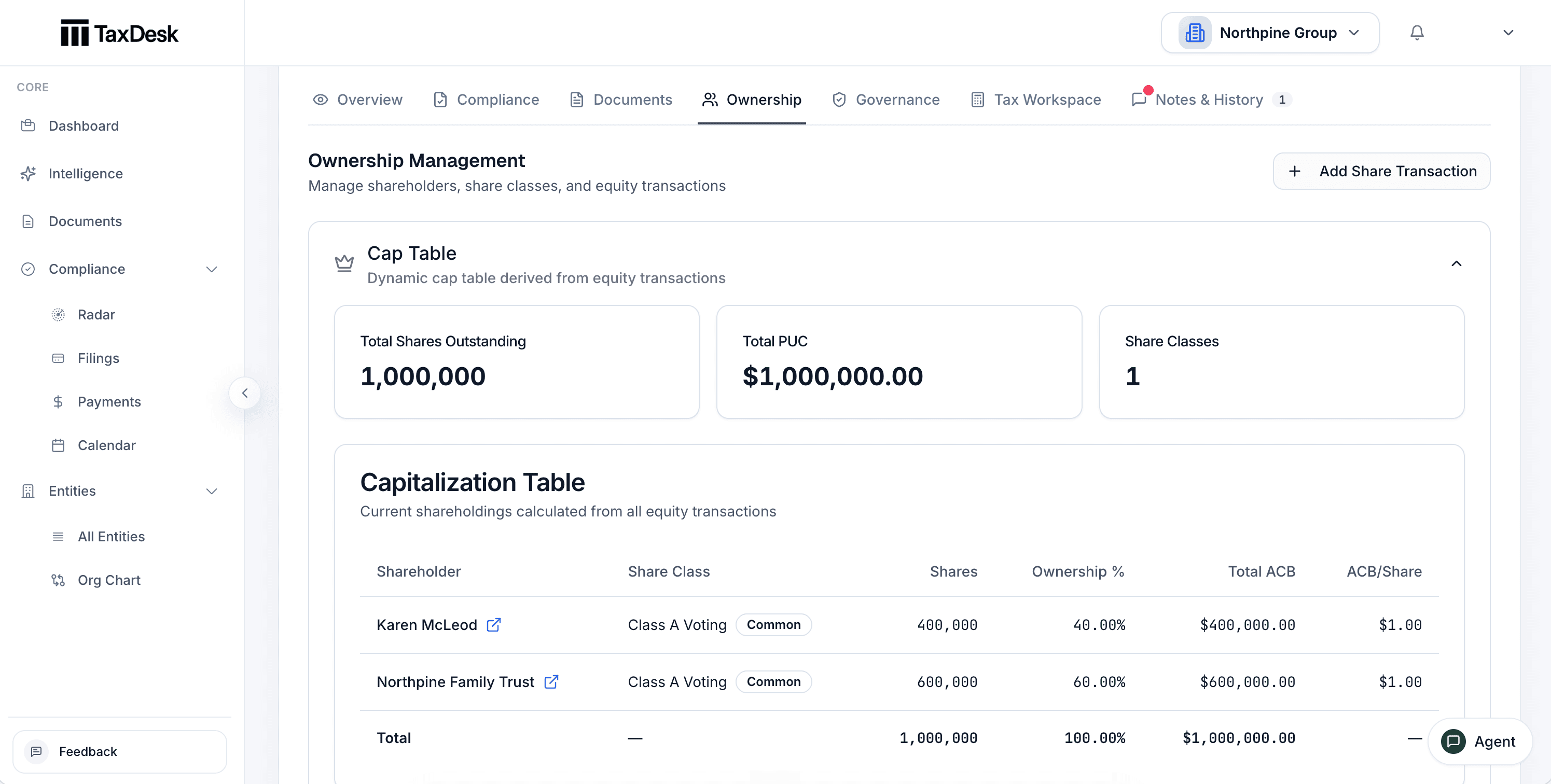
Ownership over time
A cap table is a timeline. Here’s how a professional corporation’s ownership might change over a decade, and why every date belongs on the record.
Illustrative. Each change is saved with its date, and you can view the chart as of any of them.
Inside TaxDesk · Tax balances
CDA, ERDTOH, NERDTOH, GRIP, and safe income are kept for each company, with an as-of date and a source. Open the dated history behind any balance.
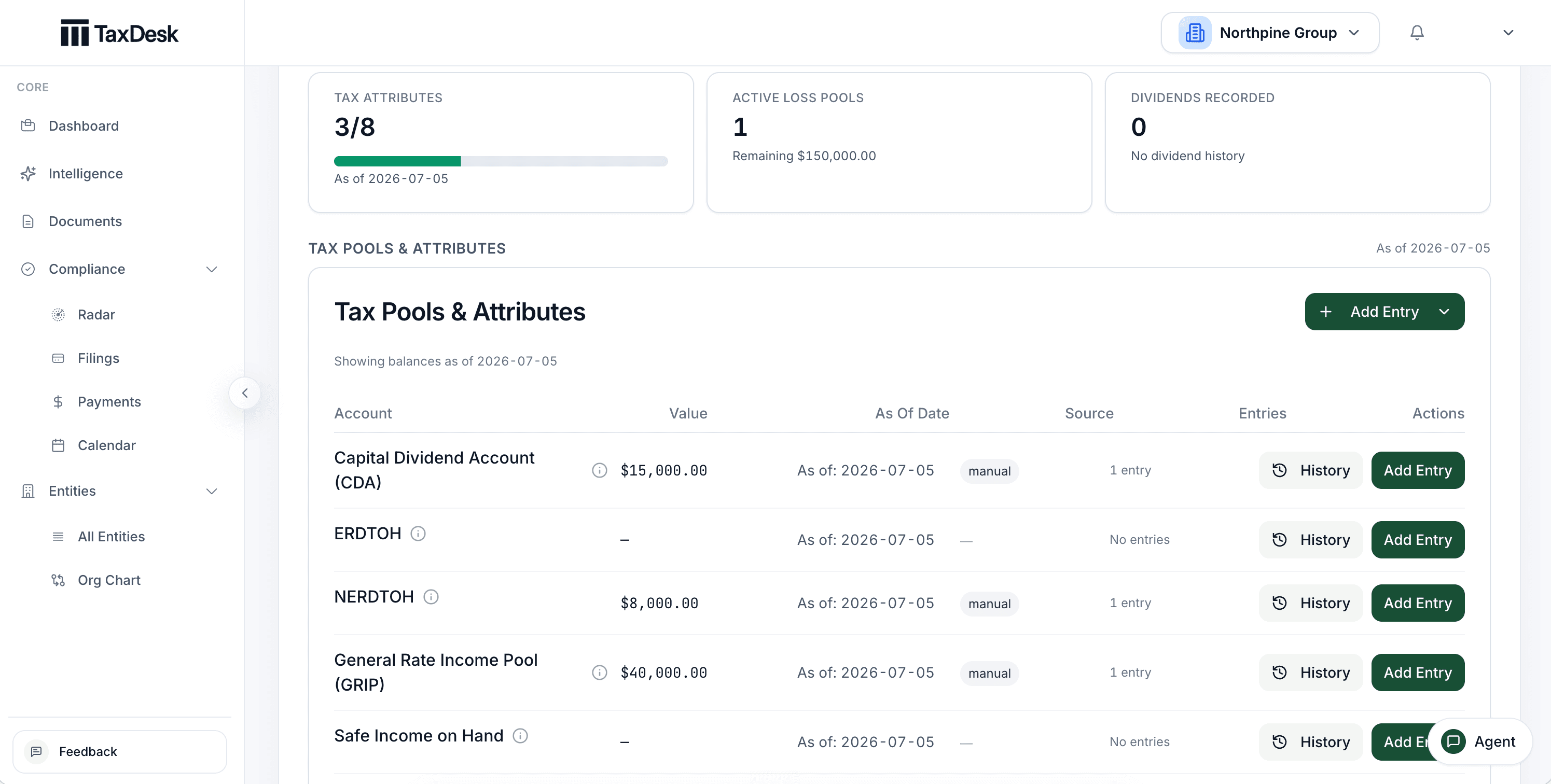
What’s in the record
TaxDesk shows how your people and companies connect, and keeps each company’s tax work on its own record. Your administrators and outside accountants work from the same information.
Who does what
YouYou or your accountant prepare and file the way you do today.
TaxDeskTaxDesk records the status, dates, and documents behind each filing.
YouYou enter each company’s CRA accounts and filing settings.
TaxDeskTaxDesk turns them into due dates. It doesn’t connect to CRA.
YouYou decide when a document disagrees with the record.
TaxDeskTaxDesk links each fact to its source. A fact that conflicts with your records waits for your approval.
Who it is for
TaxDesk keeps the corporate tax record. It doesn’t store patient charts, manage clinical operations, give tax advice, or prepare returns.
Free tools and guides
Calculators and guides for groups like yours. They’re planning aids, not tax advice.
Common questions
Give each company its own record and connect them through ownership. TaxDesk keeps each company’s CRA accounts, filings, tax balances, documents, and history separate, and one workspace shows how they fit together and what’s due across them.
Yes. Each legal entity has its own profile, deadlines, documents, and history, and stays connected to the rest of the group.
Yes. Shareholders, share classes, and share transactions are recorded with dates, and the ownership chart can be viewed as of a date. That covers associates buying in and owners retiring.
No. TaxDesk is for the corporate tax record. It isn’t a patient-management or medical records system, and patient information shouldn’t be stored in it.
No. Your accountant still gives advice and prepares and files returns. TaxDesk gives the practice and its approved advisors one record to work from.
No. TaxDesk doesn’t connect to CRA. You and your accountant file the way you do today, and TaxDesk records the status, dates, and documents behind each filing.
Request access
Tell us about your companies and the tax work you want in one place.