
TaxDesk field library
Find the rule. Set the date. Keep the evidence.
Use practical Canadian tax guides and tools to identify obligations, calculate dates, and organize supporting records.
A useful tax record answers
- 01What applies?Entity, account and activity
- 02When is it due?Period, filing and payment
- 03What proves it?Source, status and history
Start with your task
Use these guides to organize your tax work
Canadian corporate tax obligations
The full range of what a Canadian corporation can be on the hook for — filings, remittances, elections and records — organized by category and by what triggers each one.
Read the guideOrganizing tax across a multi-entity group
Entity inventory, ownership structure, program accounts, one filing calendar, shared tax attributes and intercompany balances — how to keep a Canadian corporate group organized.
What belongs in a corporation's tax file
A practical structure for a Canadian corporation's tax records — permanent vs. annual, ownership documents, tax attribute support, intercompany paperwork and CRA correspondence.
Working tools
Calculate an amount or find a due date
Subject
15 resources
Guides link to primary sources and state the next steps.
Corporate tax calculator
CalculatorsCalculate federal and provincial corporate tax for CCPCs and general corporations, including the small business deduction and investment income.
Updated Jan 2026
Corporate tax rates
ReferencesReference tables for federal and provincial corporate tax rates, CCPC benefits and small business deduction limits across all jurisdictions.
Updated Jan 2026
Tax deadlines tool
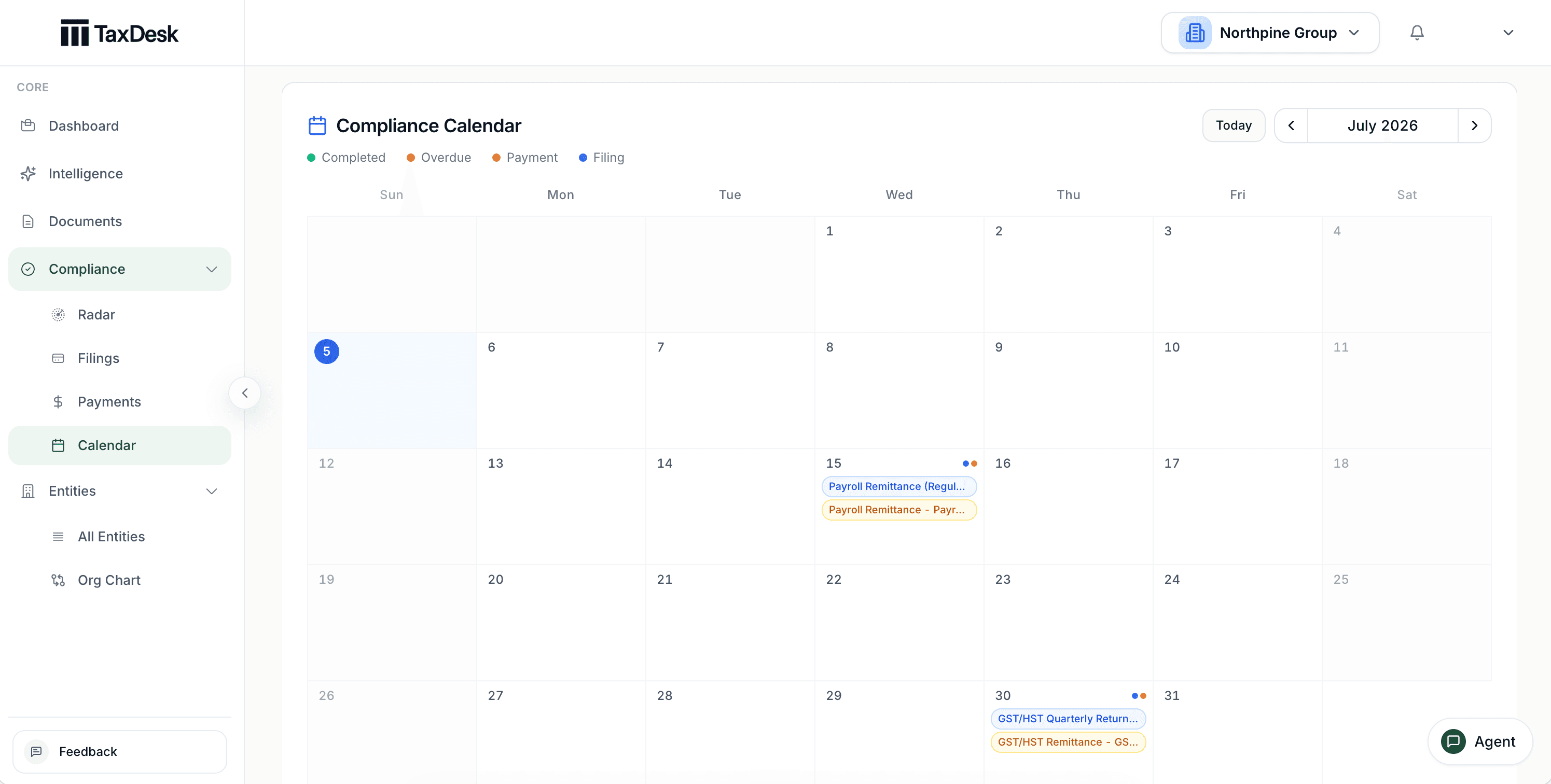
CalculatorsTrack Canadian corporate tax, GST/HST, and payroll remittance deadlines, and export them to your calendar.
Updated Jan 2026
Withholding tax calculator
CalculatorsDetermine Canadian withholding tax rates on payments to non-residents based on tax treaties and payment types.
Updated Jan 2026
CPP/EI calculator
CalculatorsCalculate CPP and EI contributions, maximums and stop dates by salary and pay frequency, with 2025 and 2026 limits.
Updated Jan 2026
EIFEL calculator
CalculatorsCalculate the Excessive Interest and Financing Expenses Limitation under s.18.2 ITA, including ATI and the 30% fixed ratio.
Updated Jan 2026
Canadian business tax: a practical operating guide
GuidesA practical guide to Canadian business taxation across corporate structures — obligations, rates and how the pieces fit together.
Updated Jul 2026
GST/HST for Canadian businesses: an operating guide
GuidesUnderstand GST/HST registration, filing frequency, input tax credits and compliance obligations for Canadian businesses.
Updated Jul 2026
Canadian corporate tax obligations
GuidesThe full range of what a Canadian corporation can be on the hook for — filings, remittances, elections and records — organized by category and by what triggers each one.
Updated Jul 2026
What belongs in a corporation's tax file
GuidesA practical structure for a Canadian corporation's tax records — permanent vs. annual, ownership documents, tax attribute support, intercompany paperwork and CRA correspondence.
Updated Jul 2026
Organizing tax across a multi-entity group
GuidesEntity inventory, ownership structure, program accounts, one filing calendar, shared tax attributes and intercompany balances — how to keep a Canadian corporate group organized.
Updated Jul 2026
CDA, GRIP, RDTOH and corporate losses
GuidesA plain-English guide to the capital dividend account, GRIP, eligible and non-eligible RDTOH, and non-capital, net capital and ABIL loss pools — what they are and where they come from.
Updated Jul 2026
Shareholder and intercompany loans
GuidesThe difference between a shareholder loan and an intercompany loan, subsection 15(2) at a high level, interest and documentation, and reconciling balances between entities.
Updated Jul 2026
Why ownership and share-class records matter
GuidesLegal vs. beneficial ownership, voting vs. value, paid-up capital, dividends by share class, associated corporations and changes of control — what the ownership record needs to show.
Updated Jul 2026
Canadian business entity types and their tax obligations
GuidesCorporations, professional corporations, partnerships, trusts and sole proprietorships — how each is taxed, and why 'holding company' isn't a separate legal entity type.
Updated Jul 2026
Use the library with your team
Choose guidance for your team and responsibilities.
CPA firms must review work across many client entities. Corporate teams must connect ownership, obligations, and evidence across a group. Choose the guidance that matches your work.
Editorial standard
Check the source, date, and limits.
Technical guides link to CRA, Finance Canada, or legislation where applicable.
Each guide shows its update date and links to primary source material.
Confirm estimates and guidance before you file or make a transaction.
From reference to record
Turn guidance into work your team can track.
Keep entities, tax-program registrations, obligations, and documents in one workspace. Review each record with its supporting documents.